
Virginia’s highest court is at the center of a constitutional firestorm, weighing whether to block a voter-approved congressional map that appears to favor Democrats. The decision—now pending—could reshape the state’s political landscape just months before critical federal elections.
The case arises from a rare collision of democratic will, judicial authority, and partisan advantage. In 2020, Virginia voters approved an amendment to the state constitution creating an independent redistricting commission. The goal: end decades of partisan gerrymandering. But when the commission deadlocked in 2021, the task defaulted to the Virginia Supreme Court, which ultimately selected a map drawn by lower-court special masters. That map, while legally compliant at the time, now faces renewed scrutiny—not because of process violations, but because of its electoral effects.
The core tension? A map approved through a constitutionally sound process may still produce outcomes that skew heavily toward one party. And now, the court must decide: does a map’s partisan tilt invalidate its legitimacy, even if voters and prior rulings accepted it?
The Origin of Virginia’s Redistricting Reform
Virginia’s redistricting struggle didn’t begin in 2023. For generations, the state legislature—controlled in turn by Democrats and Republicans—drew district lines to protect incumbents and amplify partisan edges. The result was a congressional delegation that rarely reflected the state’s evolving political balance.
In 2020, fed up with manipulation, 66% of Virginia voters approved a constitutional amendment establishing the Virginia Redistricting Commission. The 16-member panel—eight lawmakers and eight citizens—was tasked with drawing fair, nonpartisan maps for both the state legislature and US Congress.
But the reform hit a wall in 2021. The commission split along party lines, failing to agree on any map. Under the amendment’s fallback provision, the Virginia Supreme Court gained authority to appoint special masters to draw the boundaries.
Critically, the court was instructed to follow specific criteria: compactness, contiguity, respect for political subdivisions, and compliance with the federal Voting Rights Act. Notably, it was not required to achieve partisan neutrality.
The special masters delivered a congressional map with 5 Democratic-favoring districts, 4 Republican-leaning ones, and 1 toss-up. Experts noted it slightly favored Democrats—especially given Virginia’s increasingly competitive electorate.
Why the Map Is Under Fire Now
Despite being court-adopted and already used in the 2022 and 2024 elections, the map is now facing a legal challenge on novel grounds. A group of Republican voters and local officials filed suit claiming the map violates the Virginia Constitution’s guarantee of “free and open elections.”
Their argument hinges on a clause stating that elections “shall not be defeated or diminished by fraud or corrupt or improper practices.” The plaintiffs contend that a map engineered to lock in Democratic advantages effectively diminishes Republican votes—particularly in suburban areas like Northern Virginia and Richmond.
Legal scholars are divided. Some argue this stretches constitutional language beyond recognition. “The Virginia Constitution doesn’t mandate proportionality,” said Dr. Lena Pruitt, a constitutional law professor at UVA. “You can have a legal map that still produces lopsided outcomes. That’s the reality of geography and voter clustering.”
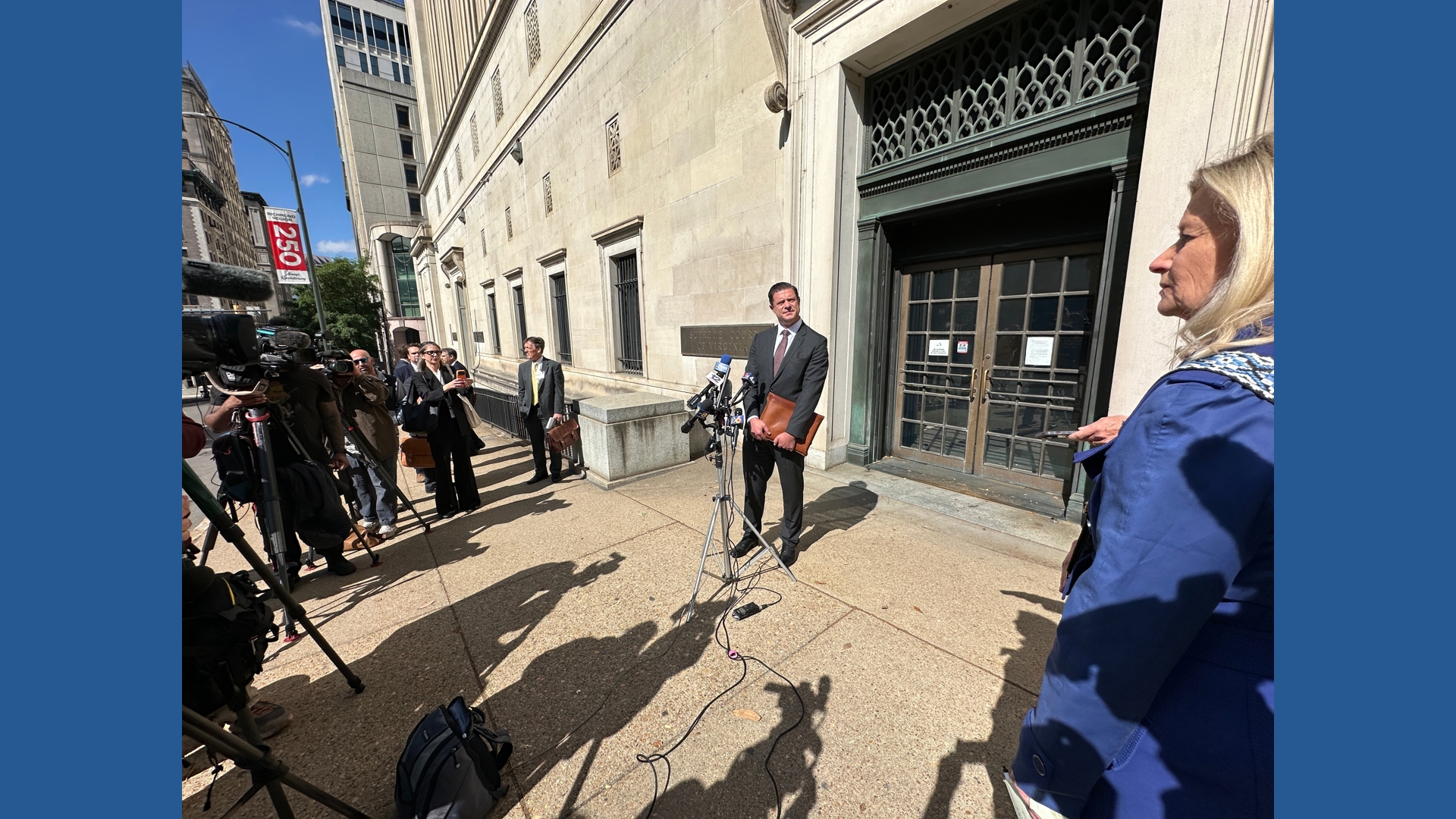
Others see merit in the claim. “If a map systematically dilutes a party’s influence across multiple districts, it may cross into anti-democratic territory,” said Richmond attorney Marcus Teller, who has litigated redistricting cases. “The question is whether ‘improper practices’ includes structural bias, even if technically legal.”
Judicial Caution Meets Political Reality
The Virginia Supreme Court’s current composition adds another layer. Once reliably conservative, the court shifted left in 2023 after Democrats gained control of the state Senate, allowing them to appoint new justices. Today, a 5-2 majority were appointed by Democratic governors.
This has fueled accusations—especially from Republican lawmakers—that the court may be inclined to protect a map that benefits their party. But justices have emphasized judicial independence.
During oral arguments, Justice S. Bernard Goodwyn pressed the plaintiffs: “You’re asking us to invalidate a map drawn by special masters, adopted under our supervision, and used in two federal elections. On what standard do we reverse course?”
The absence of a clear legal metric for “partisan fairness” is a major hurdle. Unlike states like Pennsylvania or North Carolina, Virginia has no precedent for striking down a map solely for Democratic or Republican bias. The court has historically deferred to technical compliance.
Still, the justices acknowledged public concern. “When voters approve a reform to end gerrymandering, they expect results that feel fair,” said Justice Cleo Powell. “Even if we can’t mandate symmetry, we have to consider whether the outcome undermines confidence in the system.”
Precedents and Pitfalls in Redistricting Law
The case echoes broader national debates over what constitutes a “fair” map. In recent years, state courts in New York, Ohio, and North Carolina have struck down maps for excessive partisan bias—even in the absence of racial discrimination claims.
But outcomes vary wildly. The Pennsylvania Supreme Court invalidated a Republican-drawn map in 2018, calling it a “prime example of gerrymandering.” The Ohio Supreme Court rejected multiple Republican maps, citing constitutional language on “competitive districts.” Meanwhile, the Wisconsin Supreme Court, after a 2023 ideological shift, upheld a GOP-favored map, arguing that partisanship is an inherent part of politics.
Virginia’s case is different. The map wasn’t drawn by legislators. It wasn’t even drawn by the court itself. It came from neutral special masters operating under strict, nonpartisan criteria. Yet its electoral effect leans Democratic—largely because Democratic voters are more efficiently distributed in urban and suburban areas.
This raises a key point often missed in redistricting debates: not all partisan bias is gerrymandering. Urban concentration of Democratic voters in Richmond, Alexandria, and Roanoke naturally creates “wasted” votes in lopsided districts. Republicans, more evenly spread across rural and exurban counties, can win more seats with fewer total votes.
“The map reflects reality as much as manipulation,” said redistricting analyst Dana Keir. “You can’t redraw population density. If Democrats cluster in cities, any compact map will give them strong wins in a few districts and leave Republicans competitive in more.”
What’s at Stake in the Ruling
The court’s decision will have immediate and long-term consequences.
If the justices uphold the map, it sets a precedent that court-drawn, voter-mandated maps are insulated from partisan outcome challenges. That could strengthen the credibility of independent redistricting—even when results favor one party.

But if they block it, they risk unraveling years of planning. The 2026 elections are less than 18 months away. Altering district lines now could disrupt candidate filings, voter outreach, and campaign strategies. It could also trigger a constitutional crisis: if the court invalidates a map drawn under its own authority, what mechanism exists to replace it?
Legislators are already bracing. “We’re not ready to draw new maps,” said Del. Charniele Herring, majority leader in the House of Delegates. “And if we try, we’ll just end up back in court.”
There is no backup commission. The redistricting amendment doesn’t provide for a second attempt if the court’s map is overturned. That could force the justices to either draw a new map themselves or reappoint special masters—without clear guidance on how to avoid the same “bias” claims.
Practical Implications for Voters and Candidates For Virginia’s 8.6 million residents, the stakes are both symbolic and practical.
Voters in districts like the 7th (Outer Richmond suburbs) or the 2nd (Hampton Roads) may see their representation shift if new lines are drawn. Candidates who’ve built campaigns around current boundaries could face last-minute redistricting, forcing them to raise funds in new areas or abandon races.
Party strategists are watching closely. A blocked map could open opportunities for Republicans in historically competitive areas. But it could also energize Democratic turnout, with claims of “voter suppression” or “judicial overreach” dominating the narrative.
Local election officials are anxious. “We just finished updating precinct books for the 2024 cycle,” said Judy Kincaid, registrar in Fairfax County. “If we have to redo everything, it’s not just costly—it risks confusion and errors on Election Day.”
The Path Forward: Reform or Retreat?
Regardless of the outcome, the case exposes flaws in Virginia’s redistricting model.
The independent commission failed because it was politically balanced but ideologically frozen. With eight lawmakers—four from each party—any partisan divide doomed compromise. Experts suggest future reforms could use a truly independent citizen commission, similar to models in California or Michigan, where politics plays no formal role.
Others argue for clearer constitutional standards. “If we want fairness, we need metrics,” said redistricting expert Eli Tran. “Adopt a rule that no party should win more than 55% of seats with less than 50% of the vote. Make it measurable.”
But such changes would require another voter referendum—years away.
For now, all eyes are on the Virginia Supreme Court. Its decision won’t just determine the fate of one map. It will define whether Virginia’s redistricting experiment succeeded—or collapsed under the weight of partisan expectations.
Conclusion: A Decision That Transcends Politics
The Virginia Supreme Court isn’t just ruling on district lines. It’s deciding what fairness means in a democracy where voters are unevenly distributed and trust in institutions is fragile.
Blocking the current map may satisfy critics of Democratic advantage—but risks judicial overreach and electoral chaos. Upholding it affirms process over outcome, but may leave voters questioning whether reform truly delivered equity.
The most responsible path? Affirm the map as legally sound, while urging legislative fixes for future cycles. Reform should evolve through democratic channels, not judicial intervention.
For those engaged in Virginia’s political future, the message is clear: participate, challenge, vote—but don’t expect courts to perfect democracy. They’re meant to uphold the rules, not rewrite them to fit ideals.
FAQ
What should you look for in Virginia Supreme Court Weighs Fate of Democrat-Favored House Map? Focus on relevance, practical value, and how well the solution matches real user intent.
Is Virginia Supreme Court Weighs Fate of Democrat-Favored House Map suitable for beginners? That depends on the workflow, but a clear step-by-step approach usually makes it easier to start.
How do you compare options around Virginia Supreme Court Weighs Fate of Democrat-Favored House Map? Compare features, trust signals, limitations, pricing, and ease of implementation.
What mistakes should you avoid? Avoid generic choices, weak validation, and decisions based only on marketing claims.
What is the next best step? Shortlist the most relevant options, validate them quickly, and refine from real-world results.