
Equipment fails. Maintenance is scheduled. A technician reaches in—without realizing the power could surge back on. Seconds later, a life changes forever.
This isn’t hypothetical. It’s a routine breakdown in lockout/tagout (LOTO) enforcement—one that still causes hundreds of injuries and fatalities annually. The core question isn’t whether lockout/tagout is important. It’s when exactly it’s required—and where organizations consistently get it wrong.
The answer lies in both regulation and real-world risk assessment. OSHA’s standard 29 CFR 1910.147 isn’t just a checklist. It’s a framework for deciding when energy isolation is non-negotiable. And misunderstanding its triggers can lead to catastrophic outcomes.
Let’s cut through the confusion and map out the exact conditions under which lockout/tagout isn’t just recommended—it’s legally and ethically mandatory.
What Lockout/Tagout Actually Means in Practice
Lockout/tagout is more than slapping a tag on a switch. It’s a structured process to isolate hazardous energy sources and ensure machines stay off during servicing.
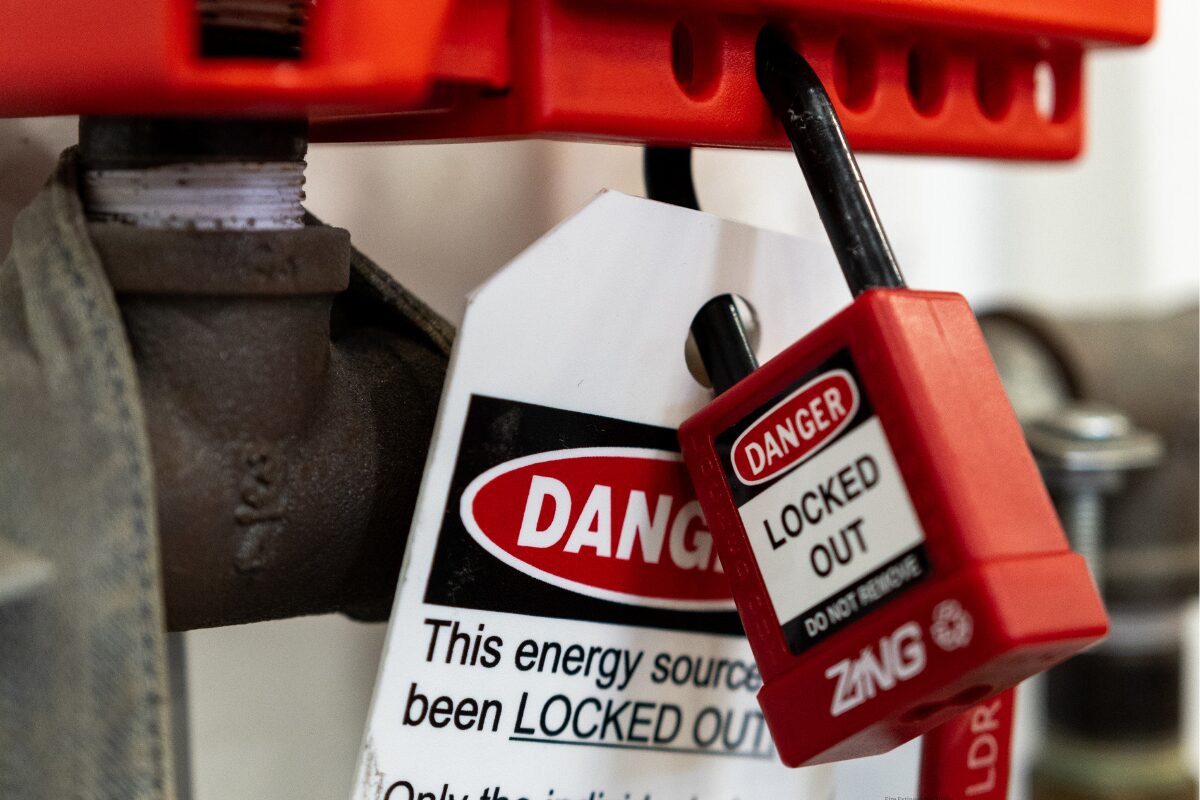
- Lockout involves physically securing an energy-isolating device (like a breaker or valve) with a personal lock.
- Tagout means attaching a warning tag to indicate the equipment is unsafe to operate.
While tagout alone is sometimes permitted, OSHA mandates lockout wherever feasible. Tags can be ignored or removed; locks enforce compliance.
The real purpose? Prevent accidental energization. That includes not just electrical power, but also hydraulic pressure, pneumatic systems, chemical feed, and even gravity (like a raised platform or suspended load).
A common mistake: assuming LOTO only applies to full machine overhauls. In reality, it kicks in during far more routine activities—if specific risk conditions exist.
The Legal Trigger: When OSHA Requires Lockout/Tagout
OSHA 29 CFR 1910.147 states lockout/tagout is required whenever employees perform servicing or maintenance on machines or equipment where the unexpected energization, startup, or release of stored energy could cause injury.
That’s the official rule. But the real-world interpretation matters more.
Let’s break down the key conditions that activate LOTO:
#### 1. Employee Exposure to Hazardous Energy If a worker places any body part into a point of operation, danger zone, or an area where unexpected motion could occur, LOTO is required.
Example: Clearing a jam in a conveyor belt. Even if it’s a quick fix, if hands go near the rollers, lockout applies.
#### 2. Servicing or Maintenance Activities "Servicing" includes repairs, lubrication, cleaning, adjustments, and tool changes. “Maintenance” covers both routine and emergency fixes.
Example: Replacing a motor on a press—even if it’s a standard procedure—requires LOTO.
#### 3. Possibility of Unexpected Energization If the machine could restart automatically (e.g., due to control system logic, gravity, spring tension, or residual pressure), LOTO is necessary.
Example: A hydraulic press with trapped pressure in its lines. Even after shutdown, stored energy can cause movement.
Not every shutdown demands LOTO. But if any one of these three conditions exists, the process must begin.
Routine vs. Non-Routine Tasks: Where the Line Blurs
One of the most dangerous gray areas? Routine production activities.
OSHA provides an exemption for minor tool changes and adjustments that are part of normal production, provided they are done using established procedures and present minimal risk.
But that exemption is often misapplied.
Consider this scenario: A worker clears a paper jam in a printer every hour. It takes 30 seconds. No tools needed. The machine has guarding, and the process is repetitive.
Is LOTO required? Likely not—if the task is minor, routine, and fully safeguarded.
Now, same machine, same jam—but this time, the guard must be removed to reach the paper. The worker reaches into the feed mechanism.
Is LOTO required? Yes. The moment safeguarding is bypassed and body parts enter a danger zone, LOTO applies.
The key differentiator: - Allowed without LOTO: Quick, minor tasks within guarded areas. - Requires LOTO: Any task where guards are removed or bypassed, or where energy control is needed.
Too many facilities treat “routine” as a free pass. It’s not. Risk—not frequency—determines LOTO necessity.
Unexpected Energy Sources That Demand LOTO
Many incidents happen not from electrical faults, but from overlooked energy types.
Here’s where organizations fail:
| Energy Type | Example | LOTO Required? |
|---|---|---|
| Hydraulic | Press system with residual fluid pressure | Yes |
| Pneumatic | Air-powered valve still under line pressure | Yes |
| Gravity | Elevated platform or suspended load | Yes |
| Chemical | Residual gas in a pipeline | Yes |
| Thermal | Hot surfaces or stored heat in industrial ovens | Yes |
| Spring tension | Tensioned rollers or mechanical arms | Yes |
Real case: A mechanic opened a hydraulic hose without releasing pressure. The snap-back caused severe lacerations. The system had been turned off—but not locked out. Stored energy remained.
LOTO isn’t just about cutting power. It’s about verifying zero energy state through bleeding lines, grounding circuits, blocking moving parts, and testing controls.
Maintenance Scenarios That Always Require LOTO
Certain activities are non-negotiable. If your team performs any of these, lockout isn’t optional—it’s the baseline.
#### 1. Replacing Motors, Belts, or Drives Accessing internal components means exposure to motion and energy. Always lock out.
#### 2. Servicing Electrical Panels Even low-voltage controls can energize a system unexpectedly. Isolate at the source.
#### 3. Cleaning Inside Machines If you’re reaching past guards—whether it’s a mixer, slicer, or packaging machine—LOTO applies.
#### 4. Adjusting Cutting Blades or Dies Blades under tension or alignment tools near moving parts create high-risk zones.
#### 5. Unclogging Feeds or Chutes When jams require disassembly or guard removal, energy control is mandatory.
Workplace mistake: Using “just a second” logic. “I’ll be quick”—is the most common prelude to injury. Speed doesn’t override risk.
When LOTO Might Not Be Required: The Exceptions
Few, but important.
OSHA allows exceptions in specific, controlled cases:

- Hot work on electrical systems under NFPA 70E (using energized work permits instead).
- Corded portable tools—if unplugged and under constant employee control.
- Minor servicing under normal production, as previously discussed.
- Set-up activities that don’t require bypassing guards or reaching into danger zones.
But even in exceptions, a hazard assessment must be documented. No assumptions. No shortcuts.
One factory avoided LOTO for die changes, claiming they were “set-up.” OSHA fined them $150,000 after an amputation occurred. The activity involved removing guards and adjusting moving parts—clearly maintenance, not set-up.
Labeling tasks incorrectly to avoid LOTO is a compliance time bomb.
Common LOTO Implementation Failures
Knowing the rules isn’t enough. Execution gaps kill.
Here are the most frequent breakdowns:
- Group LOTO without clear roles
- Multiple workers on one machine? Each must apply their own lock. Shared locks or single-point control violate OSHA.
- No verification of zero energy
- Locking out isn’t enough. You must test—try to start the machine, check pressure gauges, verify discharge.
- Using tags without locks when locks are feasible
- Tagout is a temporary measure. If a hasp or lockable breaker exists, use a lock.
- Failure to train authorized vs. affected employees
- - Authorized employees: Perform LOTO. Must be trained in procedures and energy control.
- - Affected employees: Operate equipment but don’t service it. Need awareness training.
- Outdated or missing LOTO procedures
- Every machine needs a documented energy control procedure. If it’s not written, it doesn’t exist for OSHA.
One plant had procedures—but they were for machines that had been decommissioned. New equipment had no LOTO plans. Audit failed. Incident risk high.
Building a Reliable LOTO Workflow
Preventing injury means embedding LOTO into daily operations—not treating it as a compliance chore.
Follow this framework:
- Identify all energy sources for each machine (electrical, mechanical, hydraulic, etc.).
- Develop written procedures—step-by-step shutdown, isolation, lock application, verification, and release.
- Train employees—both authorized and affected—with refreshers annually.
- Conduct annual audits—inspect at least one machine per authorized employee per year.
- Use standardized lockout devices—personal locks, group hasps, valve locks, plug locks.
Pro tip: Use color-coded locks by department or shift. It reduces confusion during multi-crew maintenance.
And always, always verify isolation by attempting to restart—only after confirming no one is near the machine.
The Bottom Line: When You Must Lock Out
Let this be your rule of thumb:
If a worker must bypass a guard, reach into a danger zone, or service equipment where stored or external energy could cause motion—lock it out.
Don’t gamble on “it’s always been fine.” Energy doesn’t negotiate.
Implement LOTO not because OSHA demands it, but because a single oversight can end a career—or a life.
Start today: Audit your top five high-risk machines. Verify their LOTO procedures. Train one team. Make it real.
Safety isn’t a policy. It’s a practice. And it begins the moment someone reaches for a wrench.
Frequently Asked Questions
When is lockout/tagout required during cleaning? LOTO is required if cleaning involves removing guards or reaching into danger zones. Routine external cleaning without exposure to hazards does not.
Do you need LOTO for changing a light bulb? Only if the fixture is part of a larger machine or requires disassembly that exposes hazardous energy. Simple bulb replacement in isolated fixtures does not.
Is LOTO required for robotic systems? Yes. Robots store energy in hydraulics, pneumatics, and batteries. Any maintenance inside the work envelope requires full LOTO.
What if the machine has no lockable disconnect? The employer must install one. Tagout alone is not sufficient if lockout is feasible.
Can multiple people use one lock during maintenance? No. Each authorized employee must apply their own lock. Use a group lockout box for coordination.
Do battery-powered tools require LOTO? If the battery is easily removable and under constant control, unplugging (removing the battery) may suffice. Otherwise, treat like any other energy source.
Who is responsible for enforcing LOTO? The employer. Supervisors must ensure procedures are followed, locks are used, and employees are trained.
FAQ
What should you look for in When Is Lockout/Tagout Required: A Practical Guide? Focus on relevance, practical value, and how well the solution matches real user intent.
Is When Is Lockout/Tagout Required: A Practical Guide suitable for beginners? That depends on the workflow, but a clear step-by-step approach usually makes it easier to start.
How do you compare options around
When Is Lockout/Tagout Required: A Practical Guide? Compare features, trust signals, limitations, pricing, and ease of implementation.
What mistakes should you avoid? Avoid generic choices, weak validation, and decisions based only on marketing claims.
What is the next best step? Shortlist the most relevant options, validate them quickly, and refine from real-world results.